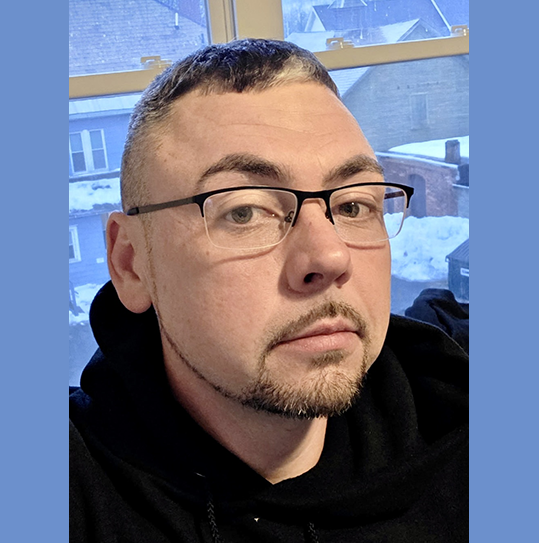
Spotlight: Claude Blount
Spotlight: Claude Blount
Claude Blount’s favorite number is 11. One day, he says, he’ll have $11 million in his pocket. He likes to aim high.
But when Claude hit rock bottom, he wasn’t thinking about aiming for anything. His addiction had robbed him of everything, including his sense of self.
“I grew up without father. I didn’t have much guidance. I started drinking and smoking weed at an early age, hanging out with the wrong people.” Claude recalls. At just 17, he was convicted of a felony offense, leading to a short stint in jail. It was the beginning of a wake-up call.
Now in recovery and six months clean, he says doing time was what got the wheels slowly turning, although getting on the right path didn’t happen right away. He needed to figure out his purpose in life.
“Through this recovery, I’ve learned a lot about myself. My biggest thing in life is self-awareness. We are so focused on other things that we don’t take the time to learn about ourselves,” Claude says.
Getting to the place he is now was a journey. Born in Florida, he moved to Massachusetts before he was two years old when his mother fled from an abusive relationship with his father. He grew up in Pittsfield, skating through school doing the bare minimum, turning to drugs and alcohol to fill his days and feed a growing addiction. Eventually, he landed in jail, but when he was released, he slipped back into his old ways. The addiction was taking over his life.
“I didn’t have anyone. I didn’t have myself. It was so cold and lonely that I would not look in the mirror. I didn’t know who I was, and I didn’t know what I was doing. I was completely broken,” Claude says. “It came to a point where I just couldn’t keep going. I had a moment where I looked up at the sky, I cried, and I asked God, ‘Can you please forgive me? Can you help me get out of here?’”
Claude can’t quite put his finger on it, but something in him changed that night. The next morning, he looked in the mirror and said, “You’re done.” As strange as it sounds, Claude says. “I had to kill the old me. I literally dressed up for a funeral. I looked in my eyes and said, ‘I have to kill you now. The old me is done and the new me is born.’ I just let something out. It gave me some type of strength in my spirit.”
Claude texted his brother, himself a recovering addict, and said he needed help. His brother told him to call Berkshire Clinical Stabilization Services (CSS). As difficult and awkward as it was to ask for help, it was the critical first step he needed, even if he didn’t believe in himself yet.
“When I showed up at CSS, I had my drug dealer waiting outside for me. I was already planning on leaving. But a staff member named Jamie talked me out of it,” Claude says. “The next day, when I woke up, I felt like I had won the first big battle. In my head I said, ‘I can do this.’ It gave me a glimpse of hope.”
He completed a detox program and then transferred to Alternative Living Centers (ALC) in North Adams, a sober living house, where he met people in similar situations and entered into recovery therapy.
“For me to be able to open up and speak in a group took about three weeks, but finally I realized I had to start talking about stuff to get through it,” Claude says. “When you’re alone, you don’t realize there are so many people going through the same thing you are. That’s a huge part of the recovery process — realizing you are not alone.”
At that time, Claude had no job and no driver’s license, but he was starting to commit to living a better life. When ALC staff recommend Second Street Second Chances, Claude grabbed the opportunity and made the call. He spoke with a staff member named Eric, set up an appointment, and showed up. Slowly, between ALC and 2nd Street, he started to get back on his feet.
“ALC told me, ‘We’ll guide you, but you have to do the legwork,’” Claude says. “When I met with Eric at 2nd Street, I was very focused on getting my life together. I want my life to mean something. I want to be successful. They helped me start to get there.”
Now sober for more than six months, Claude has plans to move into an apartment in Adams with a friend he met at ALC. He credits them and 2nd Street for helping him reinstate his driver’s license — he now has a car — and with helping him secure a job as a mason. Currently employed with Unistress, Claude’s experience with concrete work comes in handy with building his masonry skills. He builds and repairs chimneys as a side business.
“It’s not easy work, but I enjoy watching something develop that I make with my own hands,” Claude says.
Keeping busy is an important part of recovery for Claude, who works long hours and frequents the gym. He acknowledges that recovery often means leaving behind the people and places you know, but that new beginnings are possible.
“They say you’re a product of your environment, and I truly believe that. I’m particular now about who I spend my time with. Everything I do is very deliberate. I don’t take any chances,” says Claude, who deliberately chose a treatment center away from Pittsfield. “It was a good decision for me because it was a brand-new start. I broke that habit of constantly wanting to get high and drunk. It was a process, but once I figured out I had control, it felt like I broke out of a cage. If you just keep pushing, it gets easier, because you get stronger.”
Claude knows what it’s like to feel helpless and alone, but he has valuable words of advice for people who have lost their sense of self.
“The most important thing I could ever tell someone is know what you’re worth, and that you’re worth a lot. Don’t let anyone else tell you what you’re worth. I know God created me a reason and He has a plan for me,” he says.
That plan is starting to unfold for Claude, who is writing a book called “Addicted to Better.” The premise is that being an addict doesn’t have to be a bad thing or a shameful thing, if it’s used in the right way.
“If you’re addicted to being healthy, to being a father, to being a hard worker, you can use that to your advantage,” says Claude, who hopes his book will help people in situations similar to his. “If I can help even just a couple people turn their lives around, that would be great.”
He plans to have his own chimney building business one day and start investing in real estate. And, he says, he would love to open a recovery center and introduce fitness into recovery so he can provide another outlet for people with addiction. But the most important thing, he says, is hope.
“Even thought you might not see it right now, there’s so much that you’re meant for, so much purpose, so much love, so many beautiful things waiting for you,” he says. “You just have to be honest with yourself and keep making the right choices. It’s not easy at first, but you have to keep going.”
And keep going he has. “It’s a miracle I am where I am, but it’s because I wanted a better life. You can’t just go through the motions. You have to be committed. You have to do the work,” Claude says. “It’s not just for one day or a couple months — it’s a lifelong thing. I’m in it for the long haul. I’m not going back.”